
Unspoken Worlds Exhibition
Unspoken Worlds: On Exhibiting Echoes
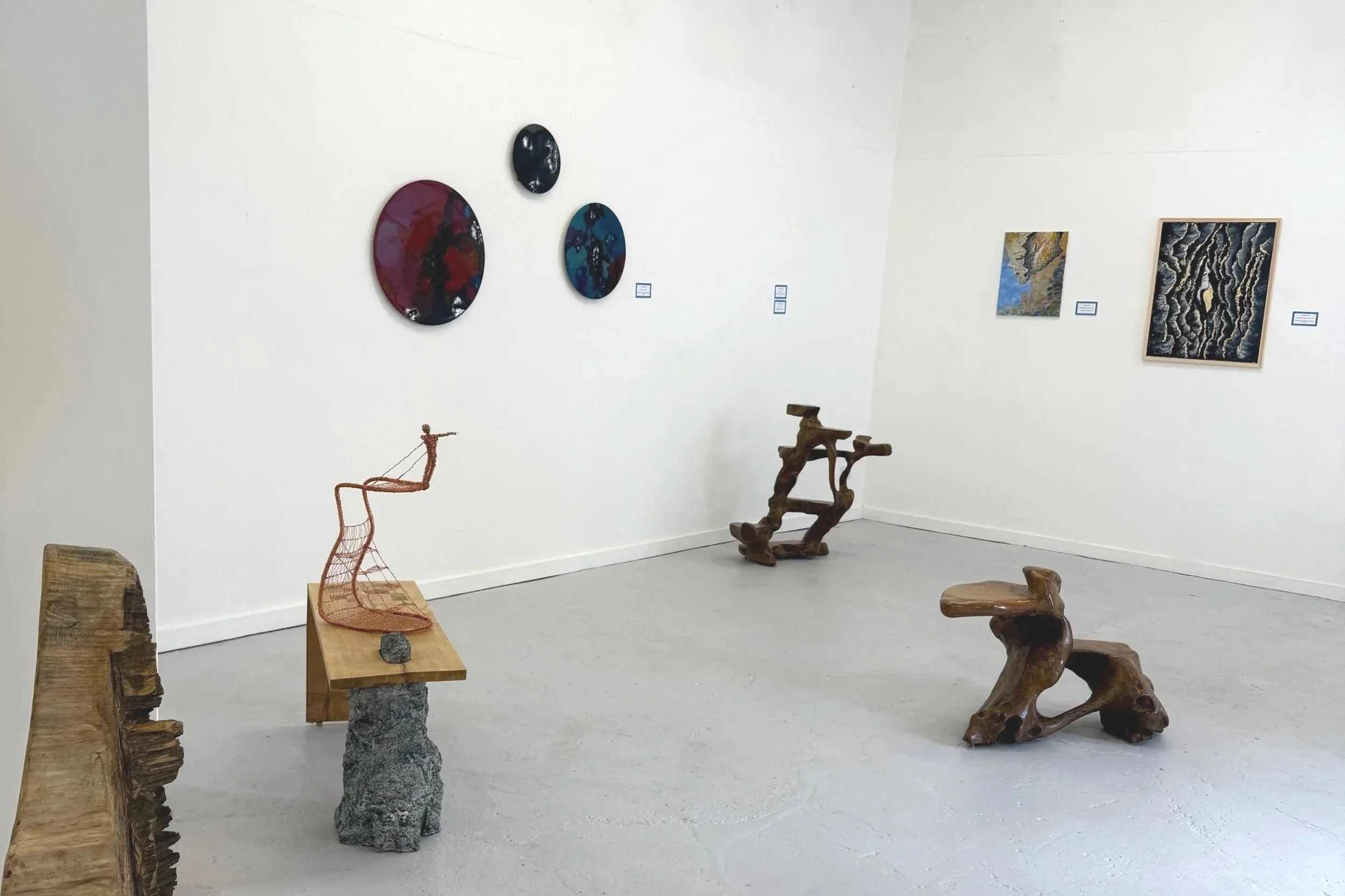
The Unspoken Worlds exhibition at Limbo Margate showcased the work of Nadya Hristakieva, Balvindar Kaur, and myself.
We collaborated as a group to exhibit, as our practices complemented each other:
Nadya Hristakieva’s practice centres on creating a “safe space” as both a physical refuge and an inner state. Through organic and constructed forms, she builds immersive structures that invite stillness, reflection, and emotional grounding.
Balvindar Kaur’s practice explores the concept of inner voice—the silent, often unspoken dialogue that exists within the self. It reflects the emotional and psychological landscapes that shape identity. (You can see more of her work on her Instagram account: @artbybalvindar369)
My practice explores cultural memory, psychological states, and narratives of women’s resilience, endurance, and adversity. Using myth as a catalyst, I look at contemporary narratives, observing how they are preserved, transformed, and carried forward across time.
Collectively, these practices embody different aspects of the psychology of the human condition.
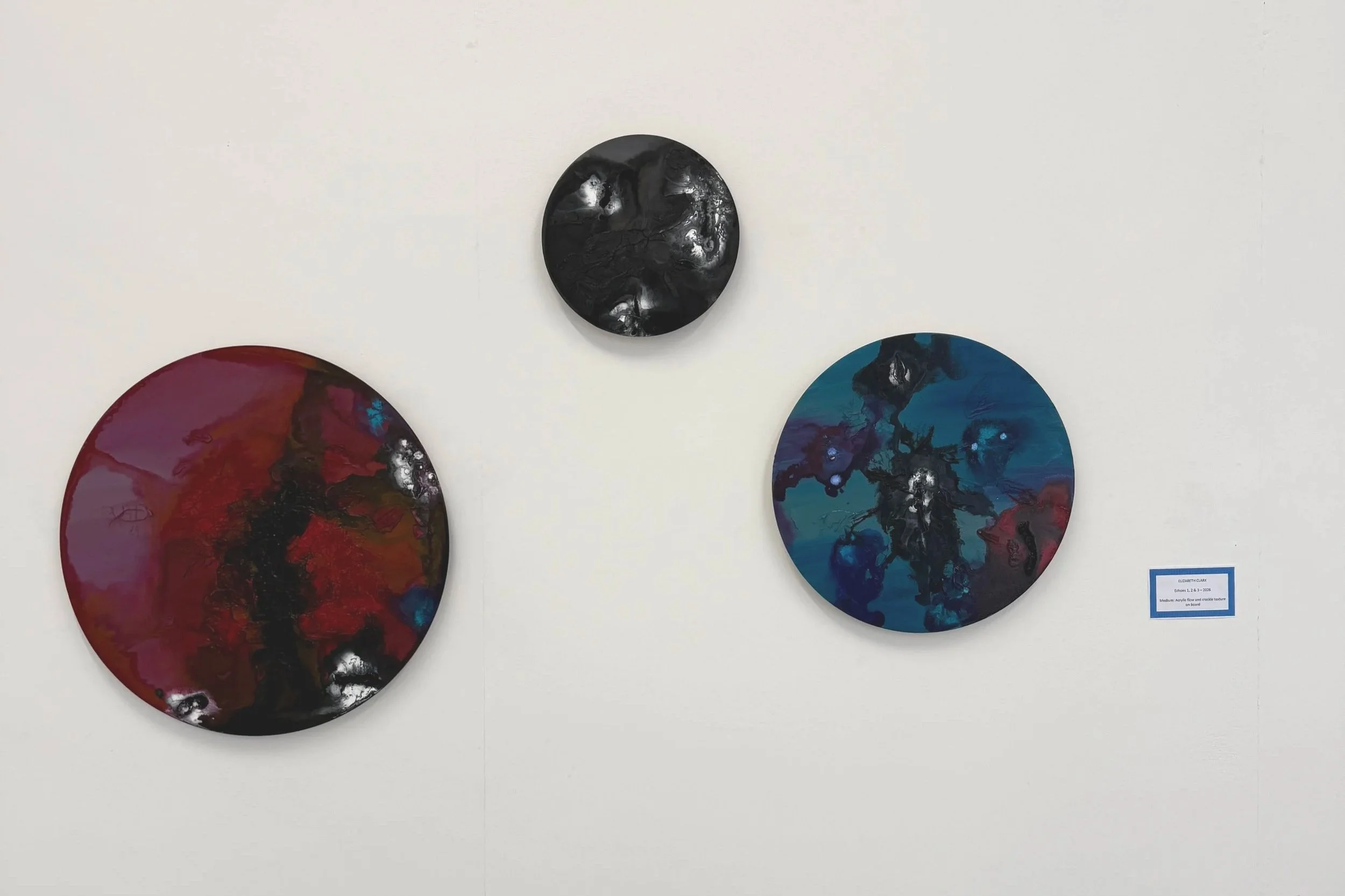
Unspoken Worlds exhibited the piece Echoes I, II & III, a piece that explores emotion, memory, and mental phases. Using the eye as a symbol of perception and witness, the paintings consider the shifting psychological states exhibited through trauma.
Colour acts as an emotional language, expressing the heightened fields and shifting responses of inner turmoil, conflict, and resilience, depicted through fractured surfaces, layered fluid paint, and fragmented forms.
The piece looks at how emotion lingers beneath the surface, inside the human subconscious, a hidden, inverted mirror to the mask worn on the outside.
The piece showcases extreme landscapes of negative emotion and its effect on the psyche.
The exhibition gave the opportunity to watch as the work was experienced by other people, which was valuable as it allows artistic growth and consideration for my next pieces. The concept of ambiguity and allowing the audience to make their own assumptions for my pieces, rather like the Rorschach inkblot tests (the psychological assessments of what a subject sees within inkblot cards), allows a plethora of different meanings and a personal mental connection and interaction with the works.
Art that does not explain itself completely allows this breathing room for interpretation, giving a pause for contemplation and reflection to consider the piece. What is it saying to me? What do I feel? And, like a mirror, do I recognise myself within it?
I am grateful for the opportunity to collaborate with two artists who consider different aspects of the human psychological experience. The exhibition reminded me that creating art is one aspect of being an artist; another is communicating with the audience through the art itself, and the other is having those conversations with other artists and the audience itself to discover the nuances of what they see and think. This allows personal growth, and this continues to evolve long after the painting has been completed.
Elizabeth Clark is a multidisciplinary artist exploring memory, mythology, resilience, and psychological states through painting, ceramics, writing, and material experimentation.
Her current enquiry is What Endures, an ongoing body of work examining what endures when memory fragments, examining resilience, psychological states, and the unseen emotional traces that persist through time.
Elizabeth also posts her Blog posts to Medium @elizabethmjclark and Substack @OnWhatEndures